Sealcoating vs. Resurfacing vs. Full Repaving: Which One Does Your Lot Need?
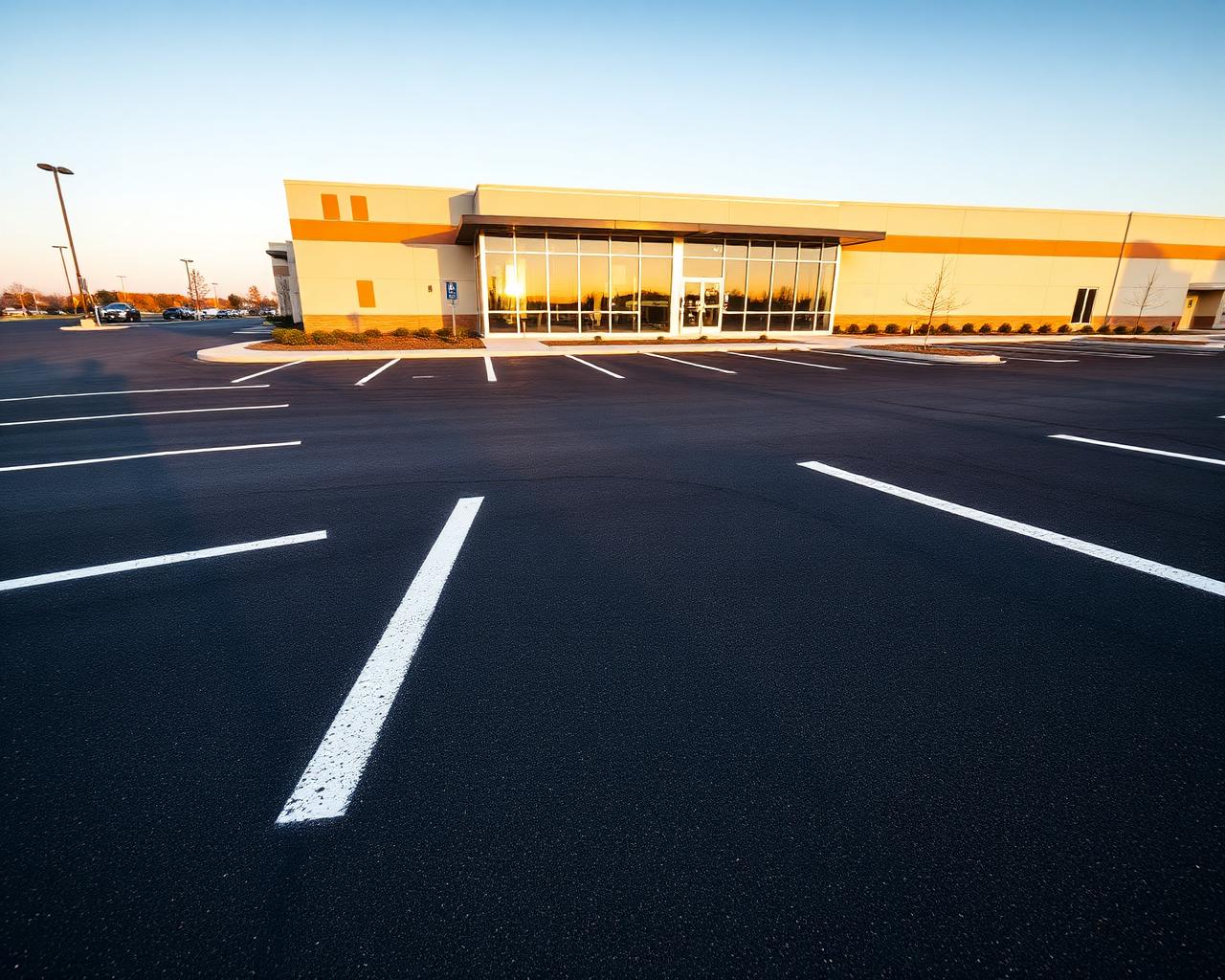
Three contractors walk the same parking lot and give three different recommendations — seal it, overlay it, tear it out. Usually they're all technically correct at different price points. The real question is what the pavement's failure mode is, because that determines which option is money well spent and which is money burned.
Sealcoating: surface protection only
Sealcoating is a coating, not a repair. It blocks UV, water and oil from degrading the binder, restores the black finish, and extends life — but it adds zero structural capacity and it will not hold cracks together.
Cost: roughly $0.18–$0.35 per square foot residential, less at commercial volume. Cycle: every 2–3 years for driveways, every 1–2 for high-traffic commercial lots.
Right call when: the surface is oxidized gray, there's minor cracking that can be crack-filled first, and the pavement is otherwise sound with no potholes or rutting.
Crack filling and patching: targeted intervention
Hot-pour crack filling seals linear cracks so water can't reach the base. This is the single highest-return maintenance action on any asphalt surface, because base saturation is what turns cracks into potholes during freeze-thaw.
Infrared or saw-cut patching handles isolated failed areas — a pothole, a settled section over a utility trench, a small alligator patch. Cost is per-area and it buys years on an otherwise healthy lot.
Right call when: cracks are under about half an inch and localized, and failure areas are a small percentage of the total surface.
Resurfacing / mill-and-overlay: the middle option
An overlay puts a new 1.5–2 inch asphalt course over the existing surface, usually after milling the edges so grades and door thresholds still work. Cost typically $3–$6 per square foot.
This works only if the base is sound. Overlaying over a failed base is the most common wasted expense in asphalt — the same cracks reflect through the new surface within one or two winters. A good contractor will core or at minimum probe before recommending it.
Right call when: widespread surface cracking and wear but no significant rutting, potholing across the whole lot, or standing water pointing to base failure.
Full-depth replacement: when nothing else is honest
Full replacement removes the asphalt and typically the base, regrades for drainage, installs and compacts new stone, then paves in courses. Cost $7–$13 per square foot residential, $4–$9 commercial at volume.
The signs that force it: alligator cracking across more than about 25–30% of the surface, rutting or depressions that hold water, potholes that keep returning after patching, and edges that crumble when you step on them.
Standing water is the tell most people miss. If water sits after rain, the problem is grade and base — no surface treatment fixes that, and every dollar spent on top of it is temporary.
A simple diagnostic you can run yourself
Walk the lot after a rain. Map where water sits. Then look at crack patterns: straight, isolated cracks are surface aging (seal and fill). Interconnected, scaly, alligator-hide patterns are base failure (replace that area at minimum).
Press a screwdriver into a cracked area. If it sinks easily, the base underneath is saturated and compromised. If it resists, you're dealing with a surface problem.
Finally, count the age. Under 5 years with good drainage: maintenance. 10–20 years with widespread cracking: overlay if the base tests sound. 20+ years with pooling and potholes: budget for replacement rather than annual patching that never ends.
Where GDL fits
We'll tell you which of the four you need — including telling you a sealcoat is a waste of money on your lot, which happens more often than you'd think. We handle sealcoating, hot-pour crack filling, patching, overlays, full-depth paving and line striping across residential and commercial properties.
Property managers get a written condition assessment with a phased budget so you can spread work across fiscal years instead of getting surprised.
GDL Solutions is a licensed and insured New Jersey general contractor working across Bergen, Essex, Passaic, Hudson, Morris and Union counties. One crew, one written scope, one point of contact — from foundation to final walkthrough. Call (646) 736-8756 or request a written estimate and we'll walk your project in person.
Frequently asked questions
Can you sealcoat a cracked driveway?
Cracks should be hot-pour filled first. Sealcoat over open cracks looks better for a season but does nothing structurally.
How do I know if my parking lot needs an overlay or full replacement?
If the base is sound and the problems are surface-level, an overlay works. Widespread alligator cracking, rutting, or standing water means base failure and full-depth replacement.
How much does it cost to repave a commercial parking lot in NJ?
Roughly $4–$9 per square foot at commercial volume for full-depth work, less for an overlay at $3–$6 per square foot.