Stop Cracks Before They Spread: The Asphalt Crack Filling Guide
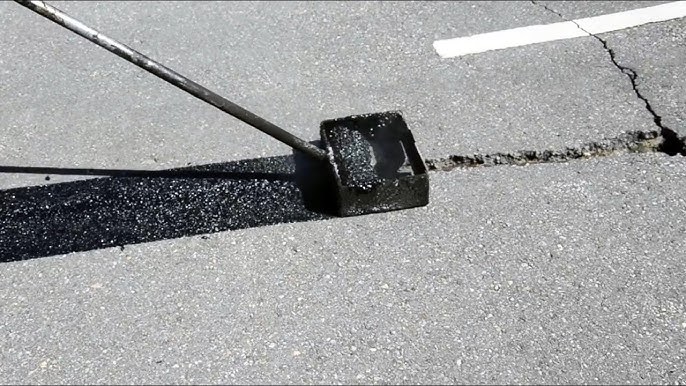
Every pothole started as a hairline crack. Water gets in, freezes, expands, and tears the asphalt apart from the inside. Crack filling is cheap. Pothole repair is not.
Why crack filling is the #1 ROI maintenance task
A $150–$400 crack-filling visit can add 8–10 years to your driveway's life. The alternative — letting cracks turn into potholes and base failures — easily runs $4,000+ in repaving.
What hot rubberized crack filler actually is
Commercial-grade hot pour rubberized filler is heated to 380°F+ and poured into routed-out cracks. It bonds chemically to the asphalt, stays flexible through freeze-thaw cycles, and seals out water for 5–10 years.
The cold-pour squeeze tubes at the hardware store? They last one winter, then shrink and fall out.
When to crack fill (and when not to)
Fill any crack wider than ¼ inch. Below that, sealcoating handles it.
Don't fill cracks where the asphalt is already crumbling on the edges — that's base failure, and it needs cutting out and patching first.
Always fill cracks BEFORE sealcoating. The order matters.