
When to Sealcoat in NJ: The Best Time of Year (and the Latest You Can)
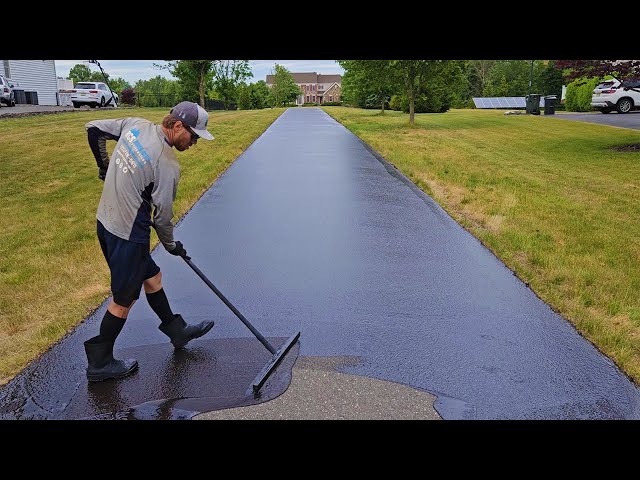
Sealcoating is a chemistry job, not just a paint job. In New Jersey, that means the calendar matters as much as the product. Apply sealer too early in spring or too late in fall and it won't cure — it stays tacky, tracks onto your shoes, and washes off in the first hard rain.
The ideal NJ sealcoating window: May through mid-October
Across North Jersey, Bergen, Essex, Passaic, Morris and Union counties, the sweet spot runs from early May through mid-October. Daytime air temps consistently sit above 55°F, overnight lows stay above 50°F, and the pavement gets the UV it needs to cure properly.
Mid-summer (June–August) is peak season — the asphalt is warm, sealer flashes off quickly, and you can usually drive on the surface within 24–48 hours.
What sealer actually needs to cure
Air temperature above 50°F and rising — at the time of application AND for the next 24 hours.
Pavement surface temperature above 55°F (the blacktop is usually 10–20°F warmer than the air on a sunny day).
No rain in the forecast for at least 24 hours after the second coat.
Relative humidity under about 80%. Humid, overcast days dramatically slow cure time.
How late in the fall can you sealcoat in NJ?
In a normal North Jersey fall, mid-October is the safe cutoff. Late October is possible in a warm year, but only with a stable 5-day forecast above 55°F and no overnight frost.
Once nights drop into the 40s, sealer applied during the day doesn't get enough cure time before temperatures crash overnight. The result is a soft, sticky surface that traps leaves and never fully hardens.
If you're calling in late October or November, we'll usually recommend hot rubberized crack filling now and scheduling the sealcoat for the following May — it's the honest answer.
Spring sealcoating: don't jump the gun
April is tempting after a long winter, but New Jersey nights routinely dip into the 30s well into the month. Wait until you see a stretch of 60°F+ days and 50°F+ nights — usually the first or second week of May.
Spring is also when winter damage shows up: salt scaling, alligator cracks, edge crumbling. Get those repaired first, then sealcoat over a sound surface.
Local timing tips for North Jersey homeowners
Shaded driveways (north-facing, heavy tree cover) cure slower — push those toward mid-summer.
Coastal and river-adjacent properties see more morning dew. Plan an afternoon application so the surface is bone-dry.
Commercial parking lots can be sealed in shoulder season by scheduling overnight closures and using fast-cure additives — ask us about it.
Frequently asked questions
Can you sealcoat in November in New Jersey?
Usually no. Once overnight lows drop into the 40s, sealer can't cure properly. We recommend crack filling in November and scheduling the sealcoat for May.
What's the earliest in spring you can sealcoat in NJ?
Typically the first warm stretch of May, once daytime temps hold above 60°F and overnight lows stay above 50°F for several days in a row.
Does it matter if it rained the day before sealcoating?
Yes. The pavement needs to be dry through the full depth of the surface. We give it 24 hours of dry weather after a soaking rain before applying sealer.