
The Year-Round Exterior Maintenance Calendar for NJ Homeowners
Most expensive exterior repairs start as a small, cheap fix that got ignored for a season or two. New Jersey's four real seasons mean your house takes a beating year-round in different ways, so we built this calendar around what actually needs attention each season based on the repair calls we get most.
Spring (March–May): assess winter damage
Walk your property after the last hard freeze and look specifically for what winter left behind: new cracks in the driveway or walkway (freeze-thaw expansion is brutal on asphalt and concrete), lifted or heaved pavers, and any stucco or siding cracks that weren't there in the fall.
Clean gutters of the winter's accumulated debris and check for ice-dam damage — sagging gutter sections, pulled-away fascia boards, or watermarks on siding below gutter joints. This is also the right window to schedule sealcoating and crack filling once daytime temps consistently hit 55°F+.
Check exterior caulking around windows, doors, and where different materials meet (like siding-to-foundation transitions) — winter's freeze-thaw cycling is the number one cause of caulk failure, and recaulking now prevents a full season of water intrusion.
Early summer (June): pressure washing and deep cleaning
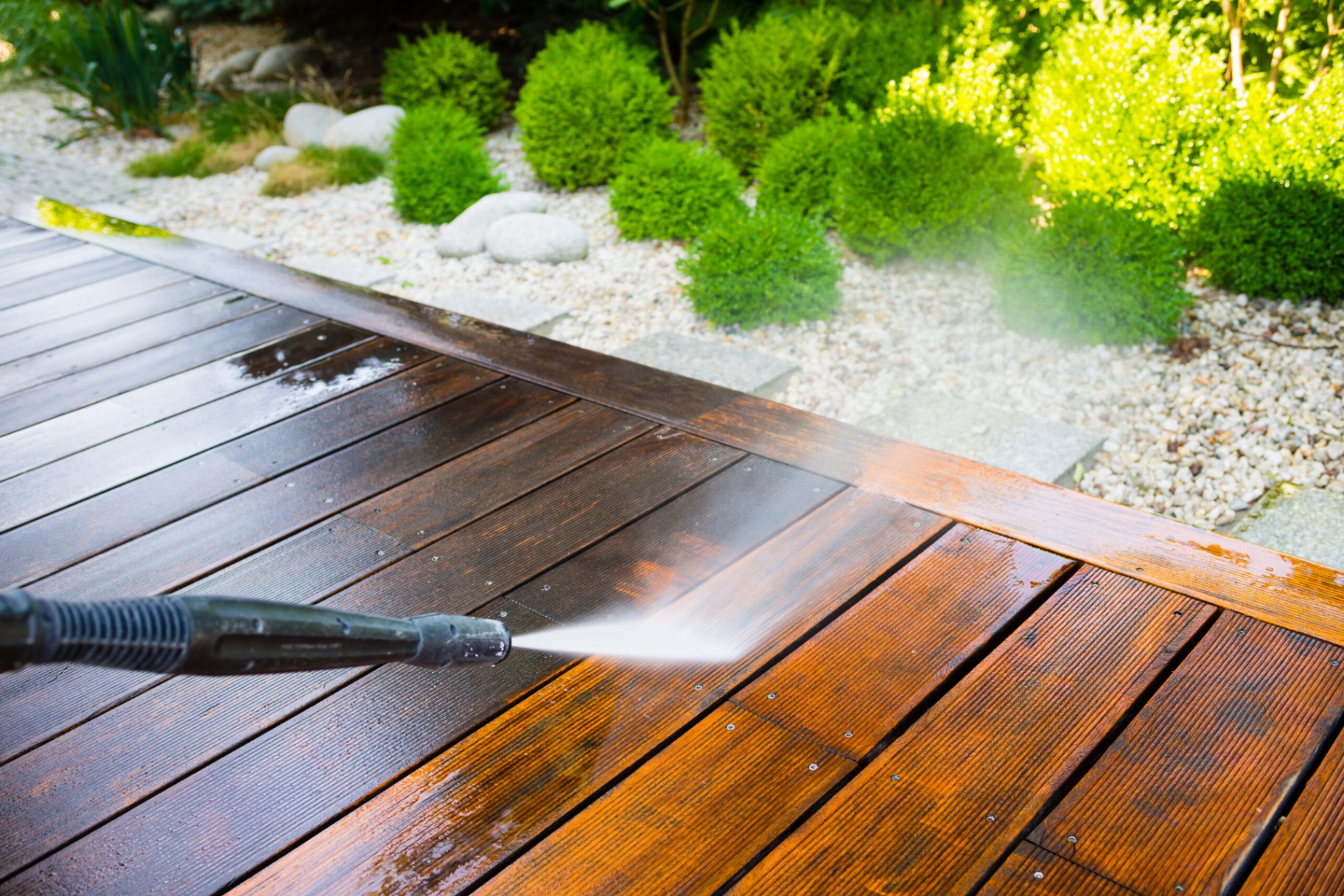
Power wash siding, stucco, and paver surfaces once temps are reliably warm — this removes a winter's worth of grime, mold, and pollen buildup that traps moisture against your home's exterior if left alone. Use appropriate PSI for each surface: too high strips paint or damages stucco and mortar joints.
This is also the ideal time to reseal pavers if it's been 2-3 years since the last sealing, since warm, dry conditions let sealer cure properly without rain interference.
Inspect and clean out window wells, check that downspouts direct water at least 4-6 feet from the foundation, and confirm any sump pump discharge lines are clear — early summer thunderstorms in NJ can be intense, and this is cheap insurance against basement water intrusion.
Late summer (July–August): catch small problems before fall rain
Inspect stucco and siding for any cracks or gaps that opened up from summer heat expansion, and patch small ones now before fall's heavier rain finds them.
Check your driveway and walkway for any new cracks that appeared during the hottest weeks — asphalt actually moves seasonally, expanding in heat and contracting in cold, and cracks often show up or worsen during these temperature swings. Crack filling now, before fall rain and winter freeze, prevents that crack from becoming a pothole.
This is also a smart window to schedule any deck maintenance — restaining pressure-treated decking in the dry heat of summer gives the stain the best cure conditions of the year.
Fall (September–November): the most important prep season
Clean gutters thoroughly after leaves drop (usually a two-round job in NJ — once in October and again in late November after oak and other late-dropping trees finish) to prevent ice dams that damage roofing, fascia, and siding all winter long.
This is the last realistic window for sealcoating and crack filling before temps drop below the 50°F threshold most sealcoat products need to cure properly — don't wait until it's too cold and end up carrying deteriorating cracks through an entire winter.
Inspect and caulk any gaps around exterior doors, windows, and utility penetrations before the heating season starts — this is both a maintenance and an energy-efficiency task, since gaps that let water in also let heated air out.
Trim back any landscaping touching your siding or stucco, since branches rubbing against exterior surfaces during winter wind and ice loading cause real physical damage over a season.
Winter (December–February): monitor, don't ignore
You can't do most exterior repairs in NJ winter, but you can and should monitor: watch for ice dams forming at roof edges, check that downspouts aren't frozen and backing up against your foundation, and clear snow off any deck or paver surfaces promptly to limit freeze-thaw cycling on the surface itself.
Never use rock salt (sodium chloride) on new concrete, pavers, or stamped concrete under 1 year old — it accelerates surface scaling and deterioration. Use a calcium magnesium acetate (CMA) based de-icer instead, which is far gentler on hardscape surfaces.
Document any damage you notice with photos as it happens (a new crack, a lifted paver, a stained ceiling under a gutter area) so you have a clear list ready for spring repairs instead of trying to remember everything three months later.
Building a realistic annual maintenance budget
Budgeting $500 to $1,500 per year for routine exterior maintenance (gutter cleaning, minor caulking, small crack repairs, pressure washing) prevents the far larger bills that come from deferred maintenance compounding into structural repairs.
Bigger-ticket items — sealcoating every 2-3 years ($300-$600 for an average driveway), paver resealing every 2-4 years ($1,800-$2,800 for a typical patio) — should be planned for on a multi-year cycle rather than treated as surprise expenses.
Homeowners who stick to a seasonal maintenance routine consistently report fewer emergency repair calls and get more total years out of their driveway, pavers, and siding before a full replacement is needed — the math strongly favors staying ahead of small problems.
One call handles most of this calendar
GDL Solutions offers seasonal exterior maintenance packages covering pressure washing, sealcoating, crack filling, paver sealing, and general exterior inspection so you're not chasing down five different contractors throughout the year.
We serve Bergen, Essex, Passaic, Hudson, Morris, and Union counties — call (646) 736-8756 or email info@godolsolutions.com to set up a maintenance schedule that fits your property.
Frequently asked questions
How often should I clean my gutters in NJ?
Twice a year at minimum — once in spring to clear winter debris and once in late fall after leaves finish dropping, typically late October through November depending on tree species nearby.
When is the best time to sealcoat a driveway in New Jersey?
Late spring through early fall, when daytime temps are reliably above 55°F with at least 24 hours of dry weather forecast after application.
Can I use rock salt on my pavers or new concrete?
No, avoid sodium chloride rock salt on pavers, stamped concrete, and any concrete under a year old since it accelerates surface scaling. Use a calcium magnesium acetate-based de-icer instead.
What exterior maintenance is most often skipped by homeowners?
Caulking inspection around windows, doors, and material transitions, and early crack filling on driveways — both are cheap, quick fixes that prevent much larger water damage and asphalt repair costs later.