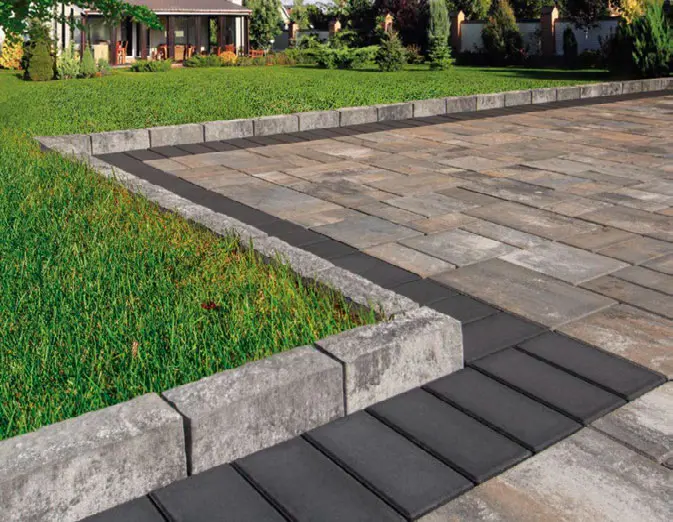
The Complete Guide to Sealing Pavers in New Jersey
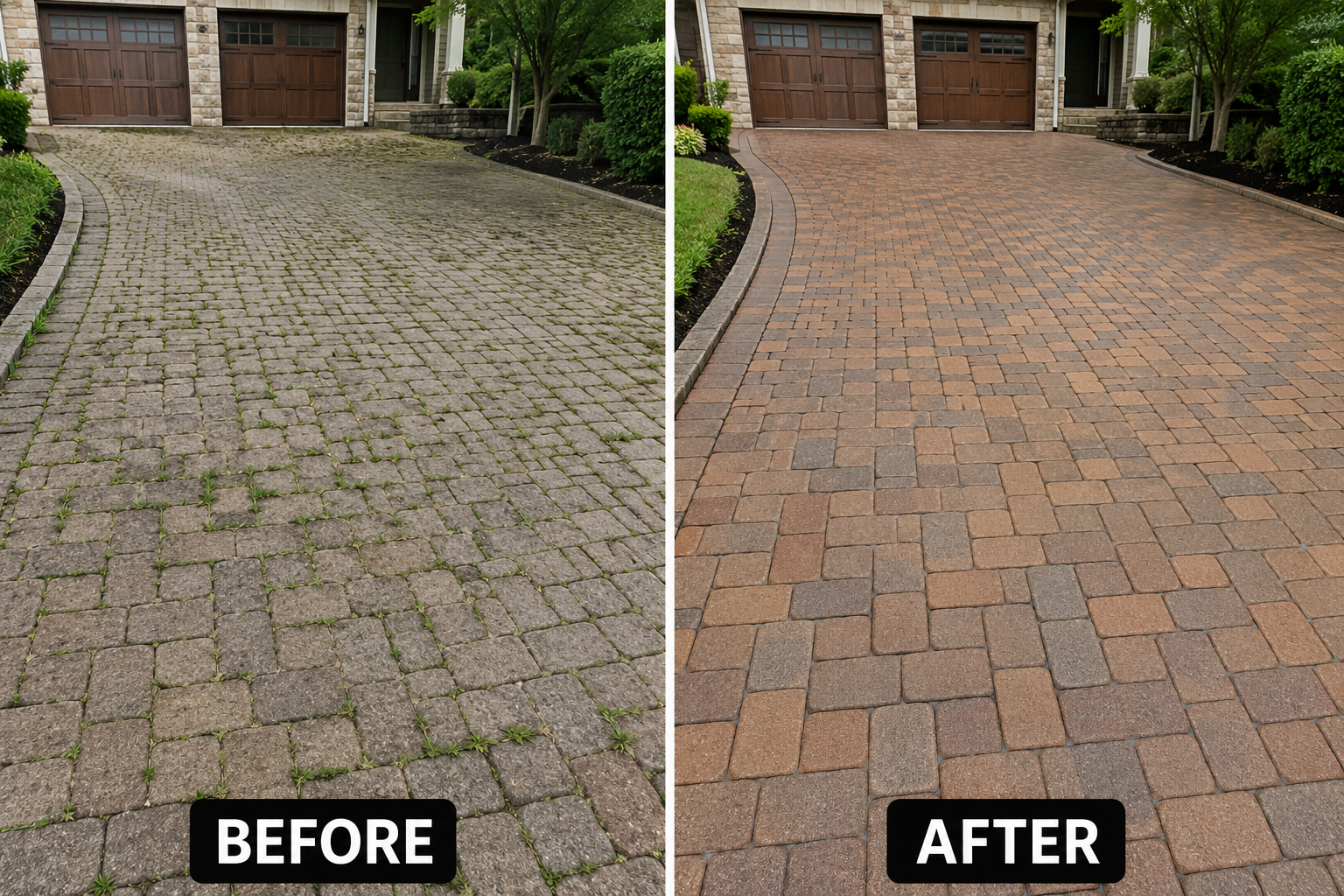
Unsealed pavers aren't ruined, but they're working against you — sun fades them, rain washes out the joint sand, and weeds find every gap. Sealing is the maintenance step most homeowners skip after paying thousands for a paver patio or walkway, and it's the one that would've protected that investment.
What sealing actually does for your pavers
A quality paver sealer does four jobs at once: it locks polymeric or regular jointing sand in place so it doesn't wash out during heavy NJ rain, it blocks UV fading that turns rich charcoal and tan pavers chalky gray, it repels oil, grease, and rust stains before they set in, and it slows weed and ant intrusion in the joints.
Sealed pavers also resist efflorescence — that white, chalky mineral bloom you see on new concrete pavers as moisture wicks salts to the surface. A breathable sealer lets that moisture vapor escape without letting liquid water soak in, which is exactly the balance you want in a climate with as many wet-to-freeze cycles as ours.
The color difference alone surprises most homeowners. A wet-look sealer on faded pavers looks close to the day they were installed — deeper color, more contrast between pavers, and a visible sheen that dry pavers simply don't have.
How often should you seal pavers in NJ?
For a new install, we recommend waiting 60 to 90 days before the first seal to let efflorescence work its way out and the paver surface fully cure. Sealing too early traps moisture and salts under the coating.
After that first seal, most NJ homes need a reseal every 2 to 3 years for driveways and high-traffic walkways, and every 3 to 4 years for patios and pool decks that see less foot and vehicle traffic. Sun-exposed south-facing areas fade and wear faster than shaded ones.
You'll know it's time when water stops beading on the surface and starts soaking in, when the color looks flat and dusty instead of rich, or when you notice sand eroding from joints after a hard rain.
Choosing the right sealer type
Wet-look (solvent or water-based enhancing) sealers deepen color and add a gloss finish — the look most homeowners want for patios and pool decks where the paver design is the visual centerpiece.
Natural-look (matte) sealers protect without changing the paver's appearance much, which is the right call for homeowners who like the current color and just want protection and joint stabilization.
For pool decks and heavily shaded walkways where slip resistance matters, we use a sealer with an anti-slip additive mixed in — skip this on a standard sunny driveway where you don't need the extra grip and it would just add cost.
The prep work that determines how long a seal job lasts
A rushed sealing job fails fast, and it's almost always a prep problem, not a product problem. We start with a commercial-grade surface cleaner and pressure wash at the right PSI for the paver material — too high strips the paver surface, too low leaves grime that traps under the sealer.
Any loose, cracked, or heaved pavers get reset before sealing. Sealing over a paver that's going to shift is a waste of material because the seal cracks the moment the paver moves.
We refill joints with fresh polymeric sand where it's washed out, activate it properly with a light water mist, and let everything dry a full 24 to 48 hours (weather-dependent) before applying sealer. Sealing over damp pavers is the number-one cause of a hazy, blotchy finish.
Cost of paver sealing in North Jersey
Sealing typically runs $3 to $6 per square foot depending on paver condition, sealer type, and whether joint sand needs replacement. A typical 500-square-foot patio runs $1,800 to $2,800 including cleaning, sand replacement where needed, and two coats of sealer.
Driveways run a bit higher per square foot because of the extra prep for oil stains and heavier traffic wear, typically $4 to $7 per square foot.
Reseal jobs on already-sealed pavers that just need a fresh coat cost less than a first-time seal since there's less repair work involved — usually 20-30% less than the initial job.
DIY sealing vs. hiring a pro
Big box store sealer kits exist, and for a small 100-square-foot walkway, a careful DIYer can get an acceptable result. The risk is application — uneven coverage leaves streaks and lap marks that are very visible once the sun hits them, and it's a permanent mistake until the next reseal cycle.
Professional application uses a low-pressure sprayer and back-rolling technique to get even coverage without pooling in joints, which is the number-one visual defect we see on DIY jobs — sealer pooling and drying glossy in the joint lines while the paver face looks matte.
For anything over a couple hundred square feet, or any driveway where oil stains and heavy sealer volume are in play, hiring out saves you from redoing it yourself in a year.
Common mistakes that ruin a paver sealing job
Sealing over wet pavers, sealing in direct hot sun (which flash-dries the sealer and causes streaking), and skipping a test patch on a hidden section are the three mistakes we see most in botched DIY and even some low-budget contractor jobs.
Using an interior concrete sealer instead of a paver-rated exterior sealer is another one — those aren't formulated for UV exposure and freeze-thaw cycling and will yellow or peel within a season.
Not replacing joint sand before sealing is probably the most common issue: sealing over gaps just glues down whatever weeds or ants are already established in there instead of fixing the actual problem.
Protect your paver investment with GDL
Paver sealing is cheap compared to the cost of resetting a patio or replacing faded, weed-infested pavers a few years early. GDL Solutions handles cleaning, joint sand, repair, and sealing as one job across Bergen, Essex, Passaic, Hudson, Morris, and Union counties.
Call (646) 736-8756 or email info@godolsolutions.com and we'll take a look at your pavers and tell you honestly whether you need a full reseal or just a spot touch-up.
Frequently asked questions
How soon after paver installation should I seal them?
Wait 60 to 90 days to let efflorescence and moisture work out of new pavers before applying the first seal coat.
Does sealing make pavers slippery?
Standard sealers add minimal slip risk on dry surfaces, but for pool decks we recommend a sealer with an anti-slip additive mixed in for wet conditions.
Can I seal pavers myself?
You can for small areas, but even coverage is difficult with a roller or hand sprayer, and pooling in the joints is the most common DIY mistake. For driveways or patios over a couple hundred square feet, professional spray application gives a more even, longer-lasting result.
What's the difference between wet-look and natural-look sealer?
Wet-look sealers add gloss and deepen color for a dramatic look. Natural-look sealers protect the pavers with minimal visible change, ideal if you like the current color as-is.