A Property Manager's Annual Exterior Maintenance Plan for NJ Commercial Properties
The commercial properties that avoid five-figure emergency repairs are the ones on a written annual maintenance calendar, not the ones reacting to complaints. Here's the season-by-season plan we run for property managers across our NJ service area.
Why a written plan beats reactive maintenance
Reactive maintenance — fixing things after a tenant complains or a pothole becomes a liability claim — always costs more than planned maintenance. A cracked asphalt joint that gets sealed for a few hundred dollars in spring turns into a full section replacement for thousands if water gets into the base over a winter freeze-thaw cycle.
A written annual plan also protects property managers professionally — it's documentation that due diligence was performed, which matters for insurance claims and owner reporting alike. We build these calendars with specific target months, not vague 'spring and fall' language, so nothing slips through a busy quarter.
Spring (March–May): assessment and repair season
Spring is when winter damage becomes visible and repairable. Walk the entire property for pothole formation, cracked asphalt from freeze-thaw cycling, roof damage from ice and wind, and gutter/downspout issues from winter debris. This is the window to schedule crack filling, pothole patching, and any asphalt repairs before summer heat and sealcoating season.
Also inspect exterior lighting, signage, and landscaping irrigation systems as they come back online — catching a dead light fixture in April is a lot cheaper than a tenant liability incident from a dark walkway in October.
Early summer (June): sealcoating and striping window
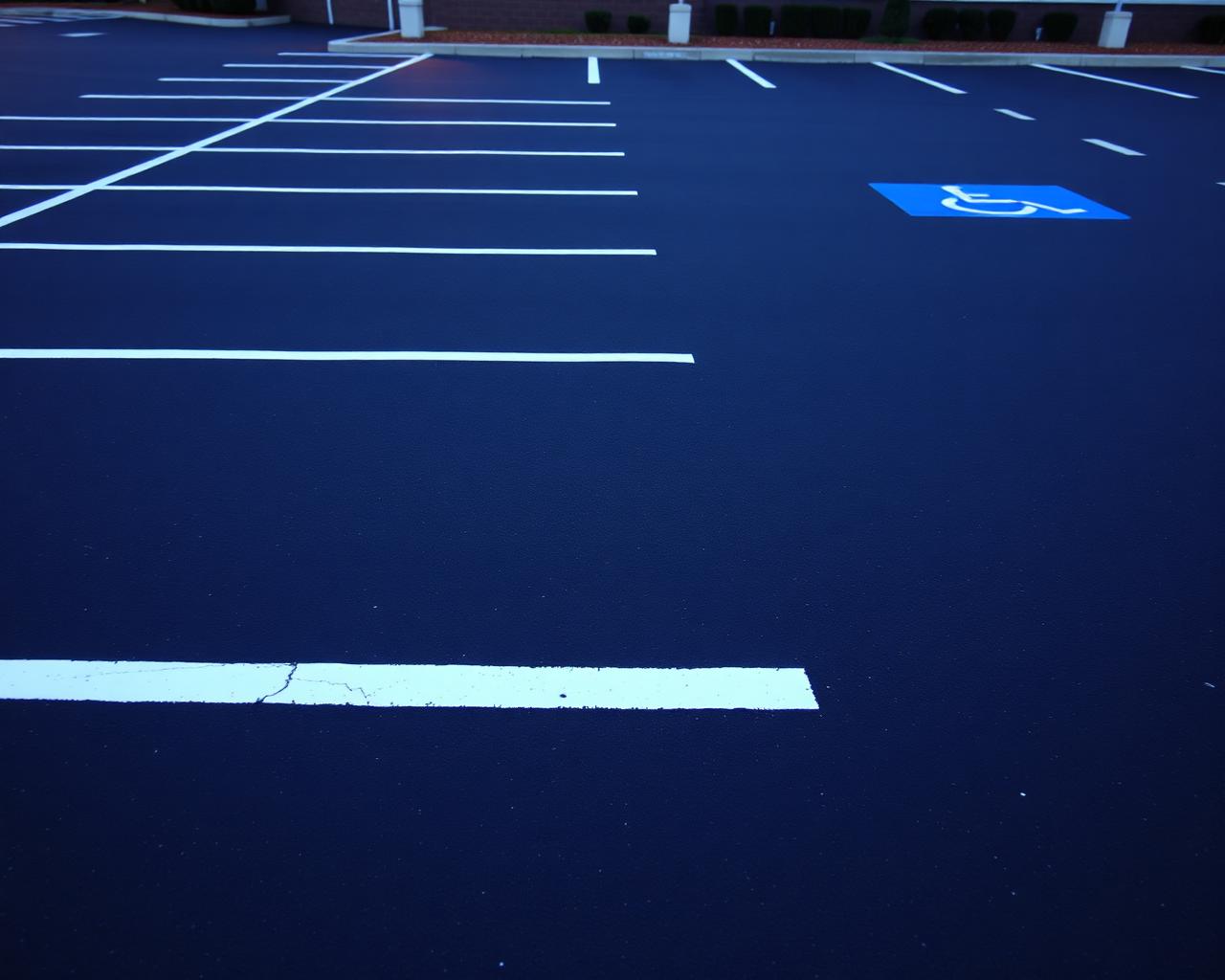
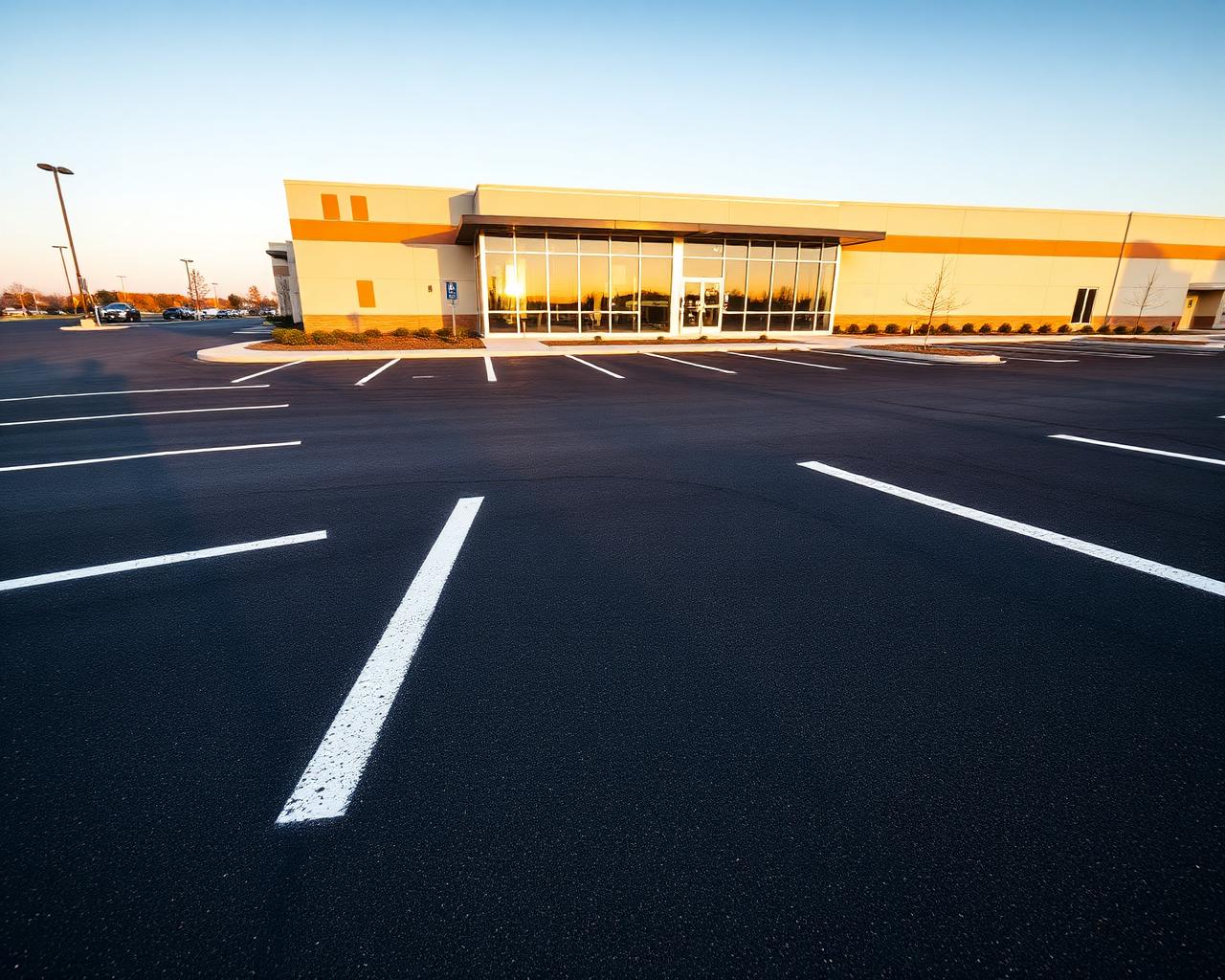
Sealcoating needs daytime temperatures consistently above 50°F and at least 24 hours without rain, which makes late spring through early fall the workable window in NJ. Commercial lots with heavy traffic should be sealcoated every 1–2 years; line striping (parking stalls, ADA spaces, directional arrows, fire lanes) should be refreshed at the same time since faded striping is both a liability and code compliance issue.
This is also the ideal time to correct ADA parking space counts or layout if your property hasn't been reviewed against current code — restriping is far cheaper than a standalone compliance retrofit later.
Mid-summer (July–August): building envelope and drainage
Inspect the building envelope — roof membrane condition, caulking and sealant at window and door perimeters, and masonry or siding for water intrusion points. Summer thunderstorms in NJ are a good stress test for drainage; walk the property during or right after a heavy rain to spot pooling, undersized catch basins, or clogged storm drains before they become a bigger issue in fall.
Landscaping maintenance also peaks here — overgrown shrubs blocking sightlines or signage are both a curb appeal issue and, in some cases, a code violation.
Fall (September–November): winterization prep
This is the most important maintenance window of the year. Clear gutters and downspouts of leaf debris before they freeze and back up. Complete any remaining asphalt crack sealing before temperatures drop below the workable range — cracks that go into winter unsealed let water infiltrate the base and freeze-expand, which is how a hairline crack becomes a pothole by March.
Confirm snow removal contracts are in place, salt/ice-melt supply is stocked, and that any property drainage issues identified in summer have been corrected before the first freeze. Winter contingency planning done in September is dramatically cheaper than emergency response in January.
Winter (December–February): monitoring and emergency response
Winter is monitoring season: snow removal execution, ice management at entrances and accessible parking spaces, and roof snow-load checks after heavy storms. Document snow removal timing and salt application for liability purposes — this record is often what protects a property owner in a slip-and-fall claim.
Use this slower construction season to plan and budget the following year's capital repairs, so contracts are in place and crews are scheduled the moment spring weather allows work to start.
Build your maintenance calendar with GDL
GDL Solutions provides year-round exterior maintenance programs — asphalt, drainage, striping, and general property upkeep — for commercial and multi-family properties across Bergen, Essex, Passaic, Hudson, Morris, and Union counties. Call (646) 736-8756 to set up a maintenance calendar built around your specific property.
Frequently asked questions
How often should a commercial parking lot be sealcoated?
Every 1–2 years for high-traffic commercial lots, every 2–3 years for lighter-use lots.
What's the most important season for exterior property maintenance in NJ?
Fall — winterization prep (gutter clearing, crack sealing, drainage correction) done in September and October prevents the majority of costly winter and spring repairs.
Should snow removal be documented for liability purposes?
Yes. Timestamped records of snow removal and salt application are often the deciding factor in slip-and-fall liability claims.
Why does reactive maintenance cost more than planned maintenance?
Small issues like cracked asphalt or clogged drains compound over freeze-thaw cycles and storm seasons into much larger repairs if left unaddressed.