Commercial Parking Lot & Site Improvements That Protect Your NOI
Property owners tend to think of the parking lot as background infrastructure until it starts costing them tenants, liability claims, or leasing leverage. Site condition has a direct, measurable line to net operating income — here's how to think about it that way instead of as a maintenance chore.
The direct link between site condition and NOI
Net operating income is revenue minus operating expenses, and a neglected parking lot hits both sides of that equation. On the expense side, deferred asphalt maintenance compounds — a $500 crack-sealing job ignored for two years becomes a $15,000 section replacement. On the revenue side, a cracked, potholed, poorly-lit lot is one of the first things a prospective tenant or their broker notices during a site tour, and it undercuts your ability to hold premium rents.
Insurance and liability exposure is the third lever. Potholes, faded striping, and inadequate lighting are common contributing factors in slip-and-fall and vehicle damage claims. A single significant claim and the resulting premium increase can erase years of maintenance savings from deferring repairs.
Prioritizing repairs by ROI, not urgency alone
Not every crack needs the same response speed, but every crack needs a plan. We help property owners triage into three tiers: safety-critical (potholes, heaving pavement, faded fire lane markings — fix immediately), value-protecting (crack sealing, drainage correction — fix on a seasonal schedule before they become safety-critical), and cosmetic (fresh sealcoat, restriping for appearance — schedule around leasing cycles and tenant tours).
This triage approach lets owners with limited capital budgets spend on what protects the asset and reduces liability first, then layer in appearance-driven work when a lease renewal or new tenant tour is on the calendar.
Drainage: the most underrated NOI protector
Standing water on a commercial lot isn't just an inconvenience — it accelerates asphalt base failure, creates ice hazards in winter, and can trigger stormwater management violations in towns with strict runoff ordinances. Correcting grading and catch basin capacity issues is less visually dramatic than a fresh coat of sealcoat, but it's often the highest-ROI site improvement available because it prevents the underlying cause of repeat asphalt failure.
We regularly find that properties with recurring 'mystery' pothole formation in the same spot every year have an underlying drainage problem that repaving alone won't fix — patch it without correcting the drainage and the same pothole reappears in 18 months.
Striping, signage, and ADA compliance as leasing tools
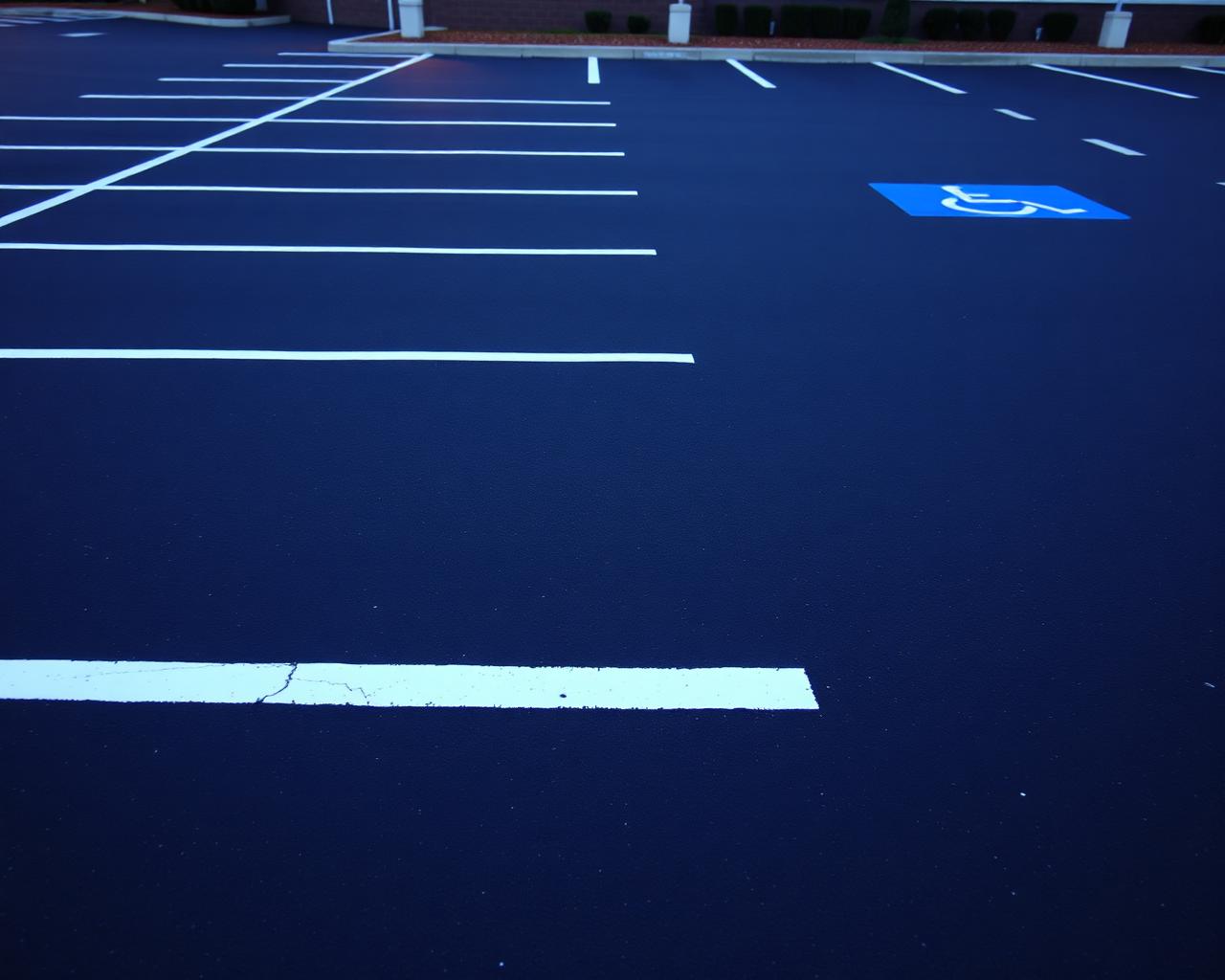
Faded striping and non-compliant accessible parking counts are both a liability issue and, increasingly, something brokers and prospective tenants notice and flag during due diligence. Fresh striping with clear directional flow, accessible spaces, and fire lane marking signals a well-managed property — a small cost relative to what it communicates to a tenant evaluating multiple properties.
For retail and mixed-use sites, well-marked, well-lit parking is directly tied to customer traffic for your tenants, which ties back to their ability to pay rent and renew leases. This is a case where an exterior improvement has a revenue impact one layer removed from the property owner's own P&L, but it's real.
Timing capital improvements around lease cycles
Major site work — full repaving, large-scale drainage correction — is disruptive, so timing it strategically around lease renewal cycles or between-tenant vacancy periods minimizes tenant friction and can be positioned to owners and tenants alike as an investment in the property's long-term value rather than a random inconvenience.
We work with property owners and managers to phase larger projects around occupancy schedules, so a full lot repaving doesn't collide with a retail tenant's peak season or an office tenant's move-in date.
Budgeting site improvements as capital, not just expense
Asphalt repaving, drainage correction, and major site improvements typically qualify for capital expenditure treatment and depreciation, distinct from routine repair expense. Talk to your accountant about how a specific project should be classified — the tax treatment can meaningfully affect the real cost of a capital site improvement versus how it looks on a maintenance line item.
Protect your property's value with GDL
GDL Solutions handles commercial parking lot repair, drainage correction, sealcoating, and striping across Bergen, Essex, Passaic, Hudson, Morris, and Union counties, with a focus on prioritizing work that actually protects property value and NOI. Call (646) 736-8756 for a site walk and a prioritized repair plan.
Frequently asked questions
How does a parking lot's condition affect net operating income?
It affects both expenses (deferred repairs compound into much larger costs) and revenue (poor site condition undercuts leasing leverage and rent levels), plus liability exposure from claims.
What parking lot issues should be fixed immediately?
Potholes, heaving pavement, and faded fire lane or accessible space markings are safety-critical and should be addressed right away, not scheduled for later.
Why do potholes keep reappearing in the same spot on my lot?
This is almost always a sign of an underlying drainage problem. Patching the surface without correcting drainage lets the same failure recur.
Is repaving a commercial parking lot a capital expense?
Often yes — major site improvements typically qualify for capital treatment and depreciation. Confirm classification with your accountant for your specific project.